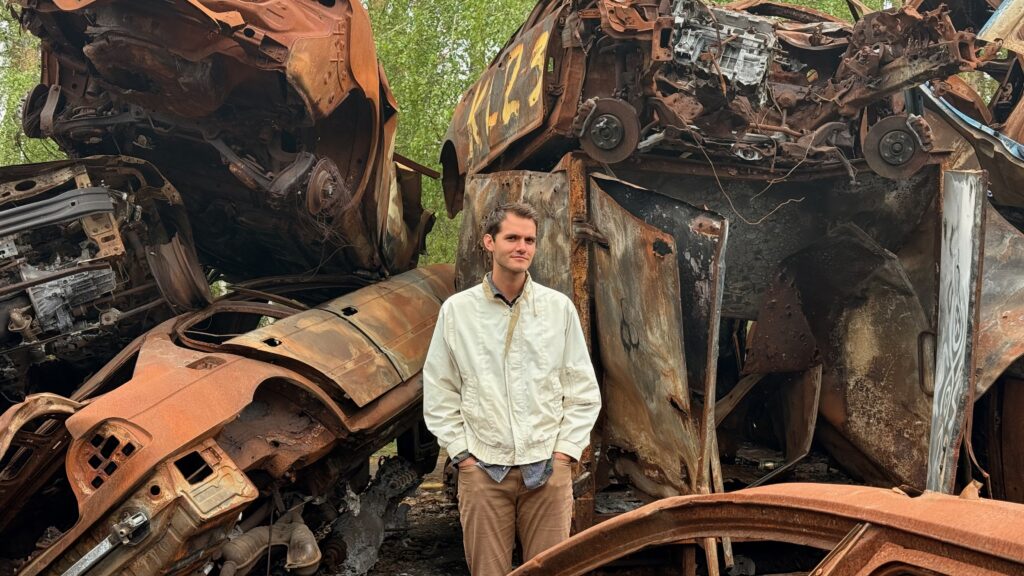


An interview with Jeremiah Reeves of Radius Church in Columbia, South Carolina, and a recent graduate of Beeson Divinity School, with which UETS recently signed a Memorandum of Partnership.
I have just finished seminary in the United States, where I earned my Master of Divinity degree. After this trip to Ukraine, I’ll be returning to help serve and lead at a church in Columbia, South Carolina.
I’m one of six children, and many of us are involved in ministry and serving the Lord in different ways. I also do quite a bit of writing, so after this trip I hope to take some time to reflect on these experiences and try to put them into words.
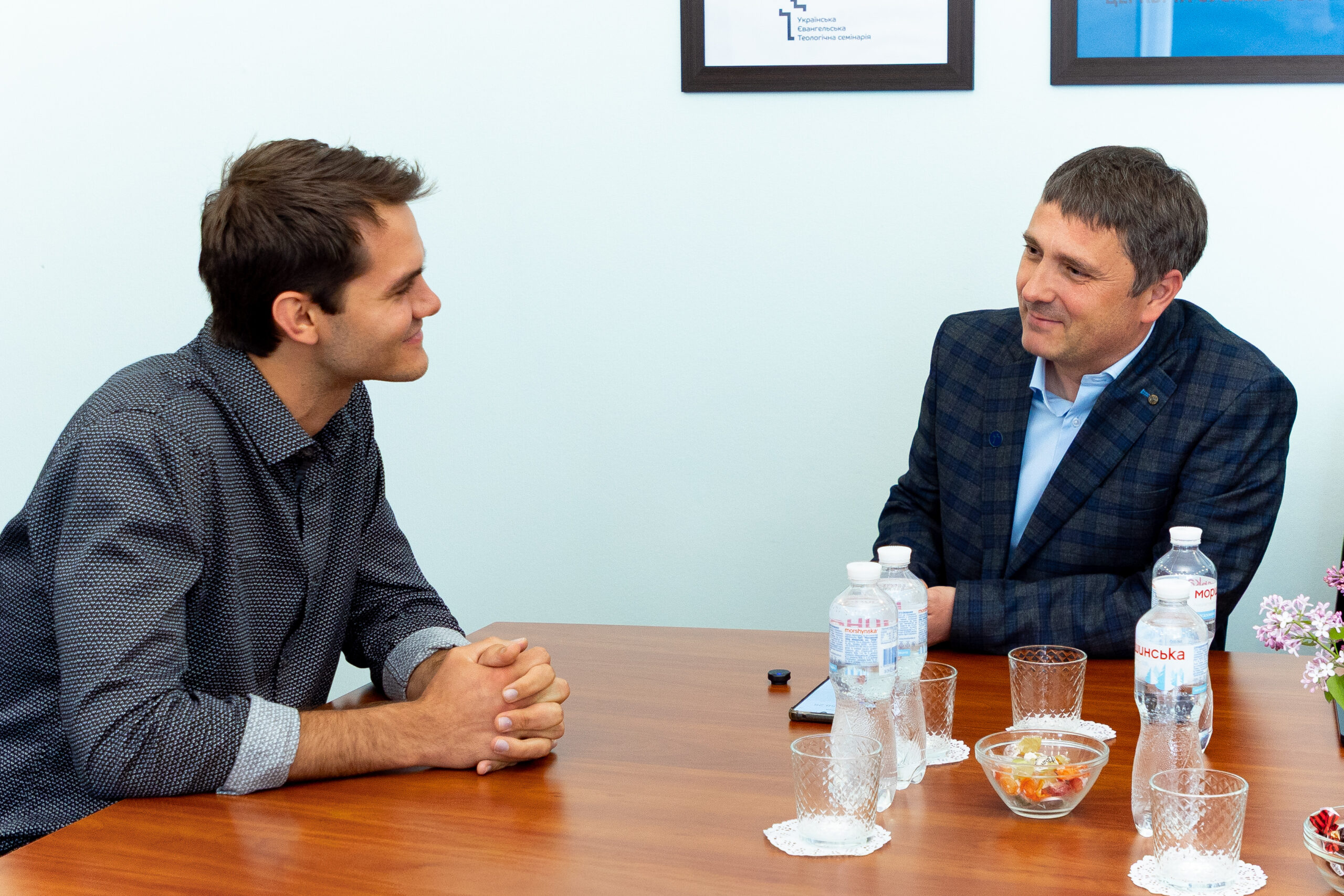
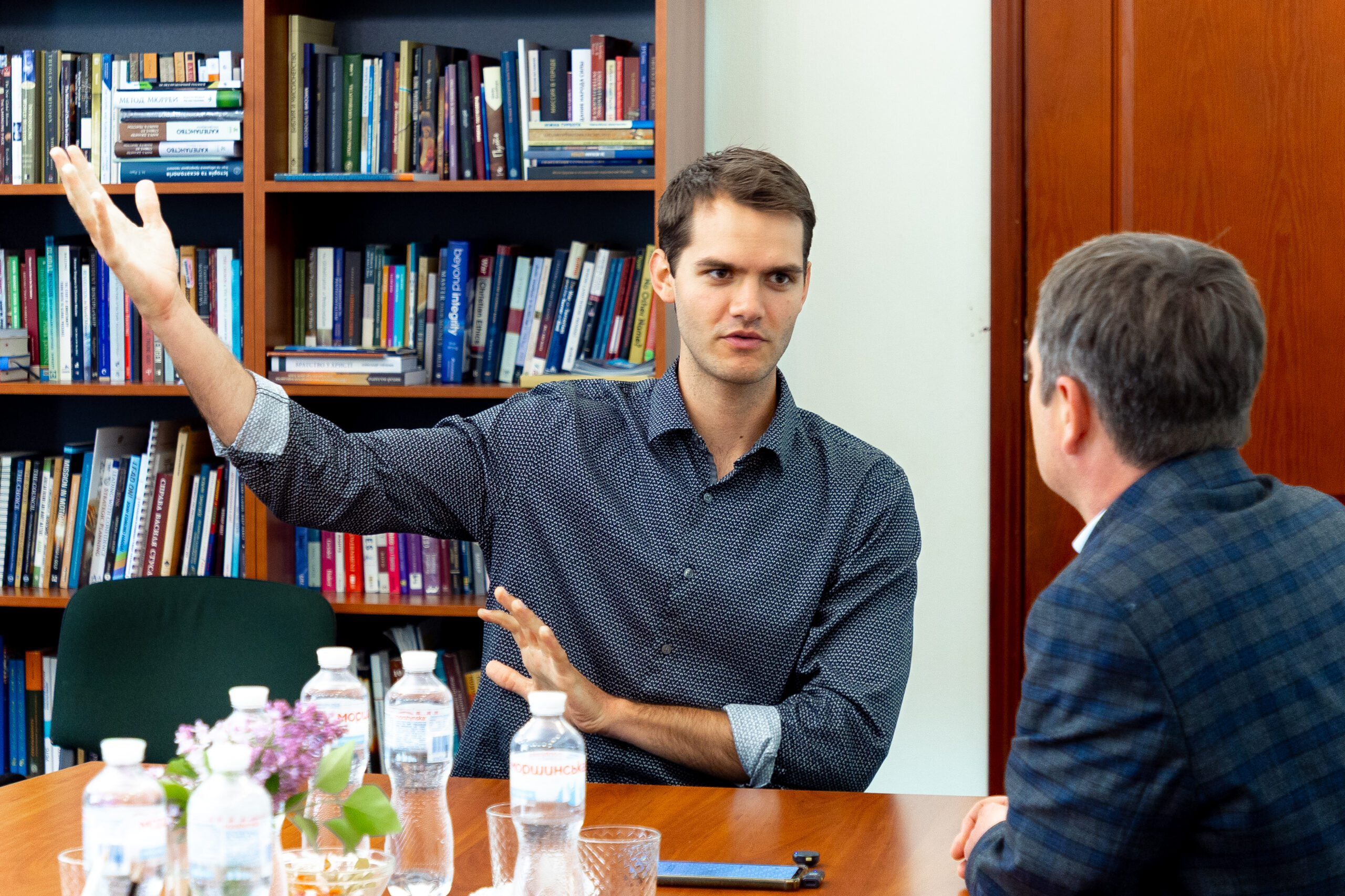
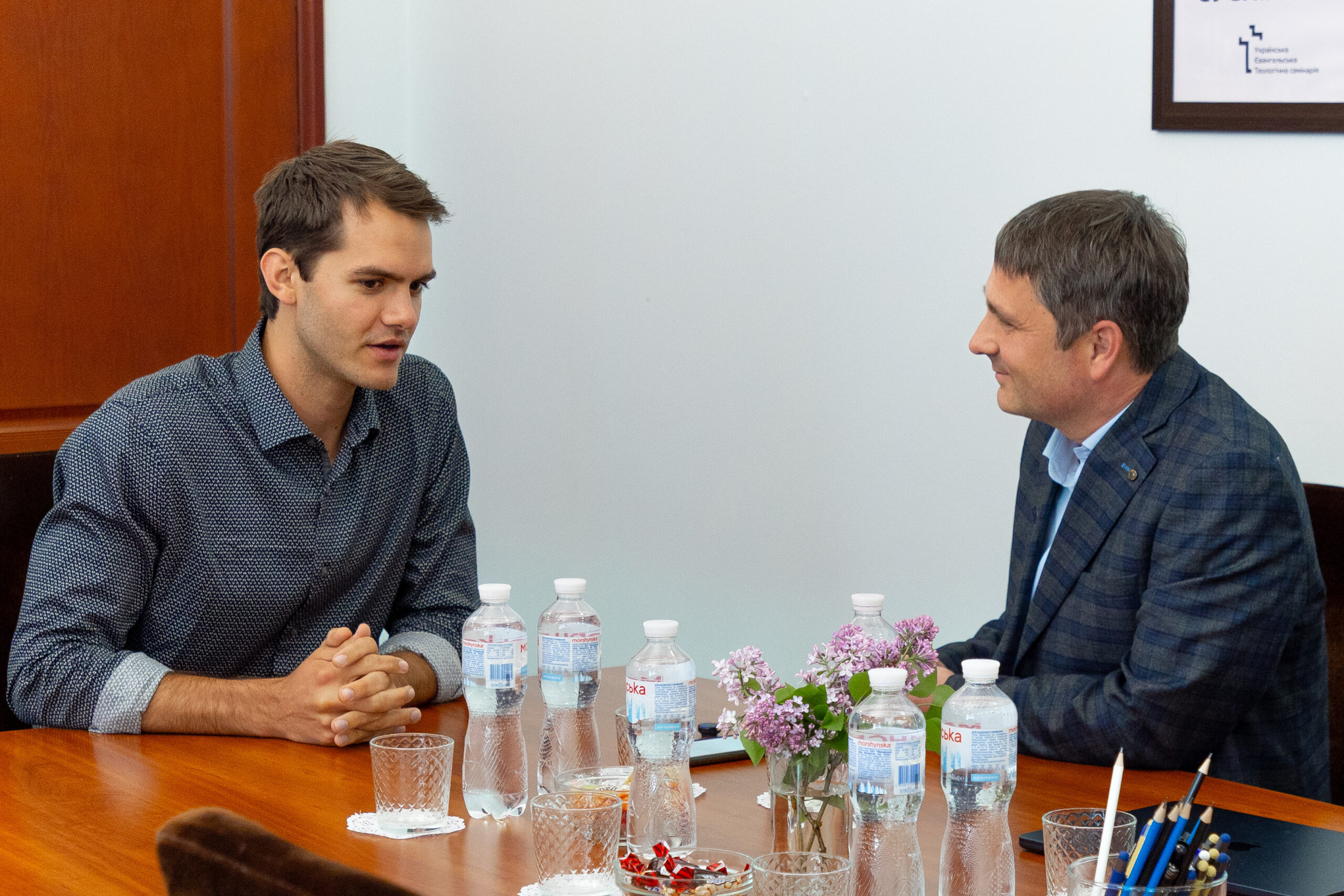
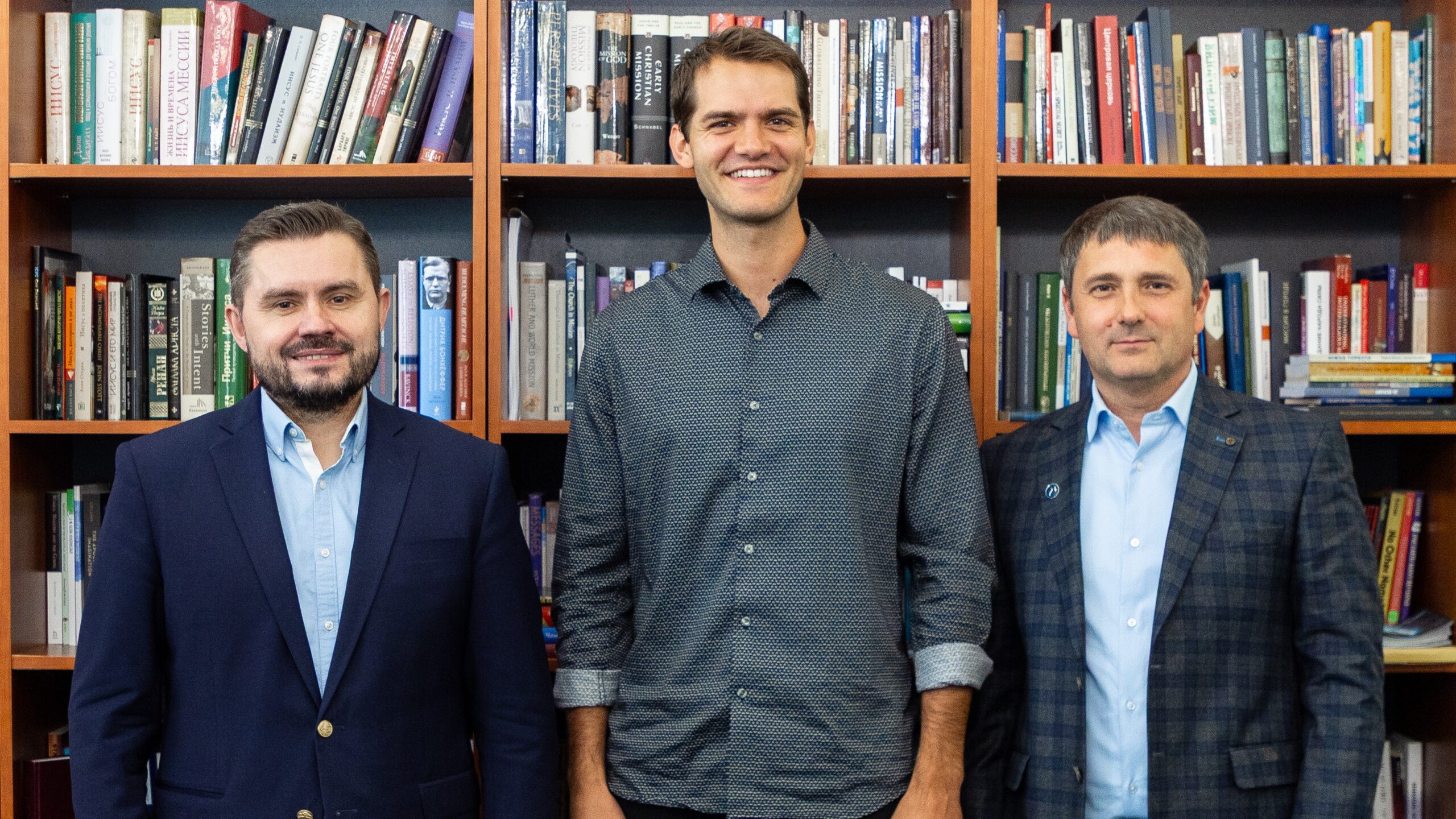
What brought you to Ukraine? How did you happen to be here?
I came to Ukraine after meeting the president of UETS, Ivan Rusyn, in Alabama, which was a real surprise to me. He visited Beeson Divinity School, where I was studying. I already knew I wanted to come to Europe at some point, and after hearing him speak, I became very interested in seeing the church in Ukraine firsthand.
Did he invite you?
No, I actually invited myself , and he was very welcoming about it.
What actually drove you to come here?
I felt there was so much to learn from being here with all of you in Ukraine. Spending time with believers from different parts of the world really changes the way we relate to Jesus and to one another. I was deeply moved by what Ivan shared, and it made me want to come, experience it personally, and see it for myself.
Can you share your impressions of these past few days in Ukraine? What have you been doing here so far?
I think my impression may not be completely typical because there happened to be a three-day ceasefire while I was here, so I haven’t experienced the full reality of the war.
But what I’ve seen is that the war affects everything. It shapes theology, the way people live day to day, and even relationships.
Experiencing that firsthand is very different from simply hearing someone talk about it. It’s no longer just Ivan telling me these stories… We’ve visited places like Bucha, seen the mass grave near the church, and the bridge that was destroyed during the Russian invasion. Even now, years later, people still come there grieving and are moved to tears while standing in those places. That makes everything feel much more real and tangible.
At the same time, personal relationships make a huge difference. Getting to know you, Ivan, Fedir, and others allows me to enter into your world in a way that simply reading articles online never could.
Sharing meals and spending time with people here has completely changed the way I understand what’s happening in Ukraine. It has also changed how I think about the church globally and has even helped me understand the Bible in a different way.
What are one or two things you’ll share with your friends, relatives, or family back home about Ukraine besides Ukrainian borshch?
I think one of the main things I’ll remember is some of the conversations I’ve had here. I especially remember hearing Ivan talk about how the war has made people less quick to judge others for how they respond to suffering and trauma. That really stayed with me. It made me reflect on how tragedy shapes people differently.
Sometimes the people you expect to be strong, outspoken, and resilient react in ways you would never anticipate once suffering actually reaches them personally. And sometimes it’s the opposite — people you might think would collapse under pressure actually rise up with incredible strength. That was very meaningful for me, and it’s also something practical that I’ll carry into my own ministry as I continue leading and serving in the church.
I think it will also be some of the things I saw in Kyiv, in particular the rows of flags placed in memory of those who were lost, the funerals taking place day after day, and the constant presence of grief. I think that will deeply change the way I understand grief in general, but also the way I think about all of you here in Ukraine, and about my brothers and sisters around the world who are facing persecution, war, and deep suffering.
And maybe the third thing is the importance of remembering. I think we’re often very quick to move on. We want to get past painful things and focus on what comes next. But one of the conversations we had earlier really stayed with me. Ivan talked about how Russian soldiers had occupied their apartment and sat at the very table where he and his wife now sit together. And in a sense, every time they sit down for a meal, there’s a kind of remembrance, realizing ‘The Russians were here, in this home.’
On one hand, you might think the healthiest thing would be to simply move on. But on the other hand, remembering can also be part of healing. It makes something real that can otherwise begin to feel distant or unreal.
I think I’ve learned a great deal here about remembrance — through the memorials, the monuments, driving through these streets, and revisiting painful moments. We often avoid remembering because it hurts, but sometimes it’s through facing those memories honestly that we are able to heal and ensure we do not forget.